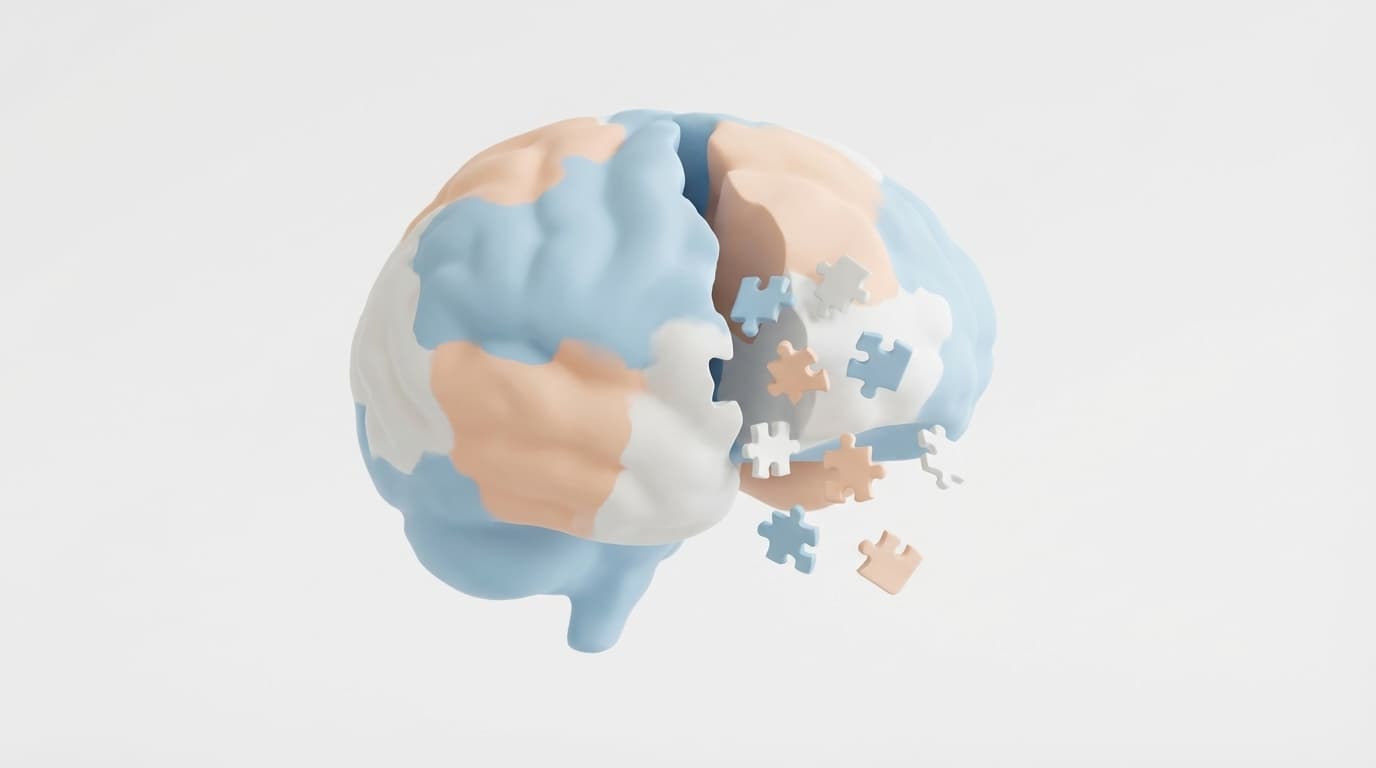
Cognitive Debt: The Hidden Cost Nobody Talks About When Building with AI
Your Team Is Building Faster Than They Can Understand
Here's a scenario I'm seeing more and more with our clients.
A team adopts AI tools. Productivity spikes. Features ship faster than ever. Everyone's thrilled. Then six weeks later, something breaks, and nobody on the team can explain how the system actually works.
Not the AI. Not the developer who prompted it. Not the project lead who approved the changes.
Software researcher Margaret-Anne Storey gave this problem a name in February: cognitive debt. And it might be the most important concept in AI adoption right now.
What Cognitive Debt Actually Is
Technical debt is a term most business owners have heard. It's the shortcuts in your code that work today but create problems tomorrow. Missing tests, messy architecture, things you'll "fix later."
Cognitive debt is different. It lives in your team's heads, not in the code.
It's the growing gap between what your systems do and what your team actually understands about how and why they work. Storey describes it as the erosion of shared understanding across a software system over time, the distance that opens up between the code that exists and the mental models the team relies on to safely change it.
The scary part? Technical debt announces itself through failing builds and bugs. Cognitive debt is silent. It shows up when someone asks "why did we build it this way?" and the answer is "I don't know, the AI suggested it."
The Early Research Is Sobering
A preprint study from MIT's Media Lab measured this directly. Researchers ran 54 participants through three writing sessions using EEG monitoring, with a smaller subgroup completing a fourth session in which the conditions were swapped.
The LLM-assisted group showed the weakest functional brain connectivity of the three conditions. Their neural networks were less broadly engaged, and 83% of LLM users could not quote anything from the essays they had just written. When LLM users were moved to a no-tools condition for the fourth session, they continued to show weaker connectivity than the group that had worked unaided from the start. The cognitive engagement appeared to lag even after the AI was taken away.
The authors are careful to note this is a preprint, focused on essay writing, and not yet peer reviewed. Even so, the direction of the signal lines up with what teams are already reporting in practice: AI assistance can quietly reduce the depth at which people engage with their own work.
This isn't just about developers. It's about every knowledge worker on your team who's leaning on AI for thinking tasks.
Meanwhile, the macro numbers tell a parallel story. A 2026 NBER study of 6,000 executives found that roughly 90% of firms say AI has had zero measurable impact on either employment or productivity over the past three years. PwC's Global CEO Survey found 56% say they've gotten "nothing out of" their AI investments.
How can that be true when everyone feels busier and faster? Cognitive debt is a big part of the answer. Speed without understanding isn't productivity. It's an illusion.
How Cognitive Debt Accumulates
It happens gradually, which is what makes it so dangerous.
Sprint one: Your developer uses AI to generate a new feature module. It works. Ships fast. Everyone's happy.
Sprint three: The AI generates code that builds on that module. The developer approves it because the tests pass. They don't fully review the architectural decisions because they trust the AI's patterns.
Sprint six: Something needs to change in the original module. Nobody can explain why certain design decisions were made. The shared understanding of the system has fragmented.
Simon Willison, one of the most respected voices in the developer community, described this from personal experience. He's been "experimenting with prompting entire new features into existence without reviewing their implementations," and finds himself getting lost in his own projects. In his words: "I no longer have a firm mental model of what they can do and how they work, which means each additional feature becomes harder to reason about, eventually leading me to lose the ability to make confident decisions about where to go next."
If it happens to one of the most thoughtful practitioners in the field, it's happening to your team.
Code That Nobody Owns
Over many iterations with AI, codebases slowly become something no one, not the humans and not the AI, fully understands. Some engineers have started calling these "haunted codebases," code that technically works but that nobody on the team can fully explain or safely change.
The data lines up with the metaphor. GitClear's analysis of 211 million lines of code from 2020 to 2024 found that the share of refactored lines collapsed from about 25% to under 10%, while copy-pasted code climbed by 48%. A separate December 2025 study by CodeRabbit, looking at 470 real-world pull requests, found AI-authored PRs contain roughly 1.7x more issues overall and are 2.74x more likely to introduce cross-site scripting vulnerabilities than human-written ones.
Steve Yegge has documented a parallel cost on the human side. After running large swarms of AI agents at full intensity, he says he can only sustain that workload for about three hours a day before the cognitive load becomes untenable. He calls it the "Dracula Effect," the drain of being responsible for code you didn't personally author. The productivity gain is real. So is the bill.
This Isn't Just a Developer Problem
If you run an agency, a consulting firm, or any knowledge-based business, cognitive debt applies to every AI workflow.
Marketing teams generating content with AI who can't explain the strategy behind their messaging. Operations teams using AI to build automations they don't fully understand. Sales teams relying on AI-generated outreach without grasping why certain approaches work.
Context switching between AI tools makes it worse. Research shows each context switch consumes roughly 20% of available cognitive capacity, and frequent switching can result in up to 40% productivity loss across a workday. That 40% productivity boost employees report from AI? It diminishes significantly when context is constantly lost between tools and sessions.
How to Pay Down the Debt
The good news: cognitive debt is manageable if you name it and build systems around it. Here's what actually works.
Slow down on purpose. Storey's core recommendation is counterintuitive but critical: "Velocity without understanding is not sustainable." Schedule regular sessions where your team explains what was built and why. If they can't, that's a red flag.
Require the "why" alongside the "what." Every AI-assisted change should include documentation of the reasoning, not just the output. Why this approach? What alternatives were considered? This takes five extra minutes and saves five extra weeks down the road.
Keep at least one human who fully understands each system. Before any AI-generated change ships, at least one person on the team needs to be able to explain it completely. No exceptions.
Use AI to maintain the understanding, not just produce the output. This is Storey's smartest insight. Use your AI tools for documentation, explanation, and knowledge sharing, not just code generation. Ask the AI to explain its reasoning. Use it to onboard team members. Make the AI work for comprehension, not just completion.
Build knowledge checkpoints into your workflow. Weekly or biweekly sessions where the team aligns on system understanding. These aren't status updates. They're "can you explain how this works?" sessions.
The Shift That's Coming
The industry is already responding. Andrej Karpathy recently coined "agentic engineering" as the evolution beyond vibe coding, emphasizing structured human oversight of AI agents rather than blindly accepting whatever the AI produces.
The businesses that thrive with AI won't be the ones that ship the fastest. They'll be the ones that ship fast while maintaining understanding. That's the difference between building an asset and building a liability.
Cognitive debt is real. It's accumulating in your organization right now. The question is whether you'll address it before it comes due.
Worried your team might be accumulating cognitive debt? Book a free 30-minute call and we'll help you audit your AI workflows for understanding gaps.
Sources:
- Margaret-Anne Storey: How Generative and Agentic AI Shift Concern from Technical Debt to Cognitive Debt
- Storey et al., From Technical Debt to Cognitive and Intent Debt (arXiv preprint, March 2026)
- MIT Media Lab: Your Brain on ChatGPT (preprint)
- NBER Working Paper 34836: Firm Data on AI
- PwC 29th Global CEO Survey (2026)
- Simon Willison's commentary on cognitive debt
- Martin Fowler on cognitive debt
- GitClear AI Code Quality Research 2025
- CodeRabbit: State of AI vs Human Code Generation (Dec 2025)
- Steve Yegge on AI agents and the Dracula Effect (Pragmatic Engineer)